Fit
Measure the foot, then read the chart
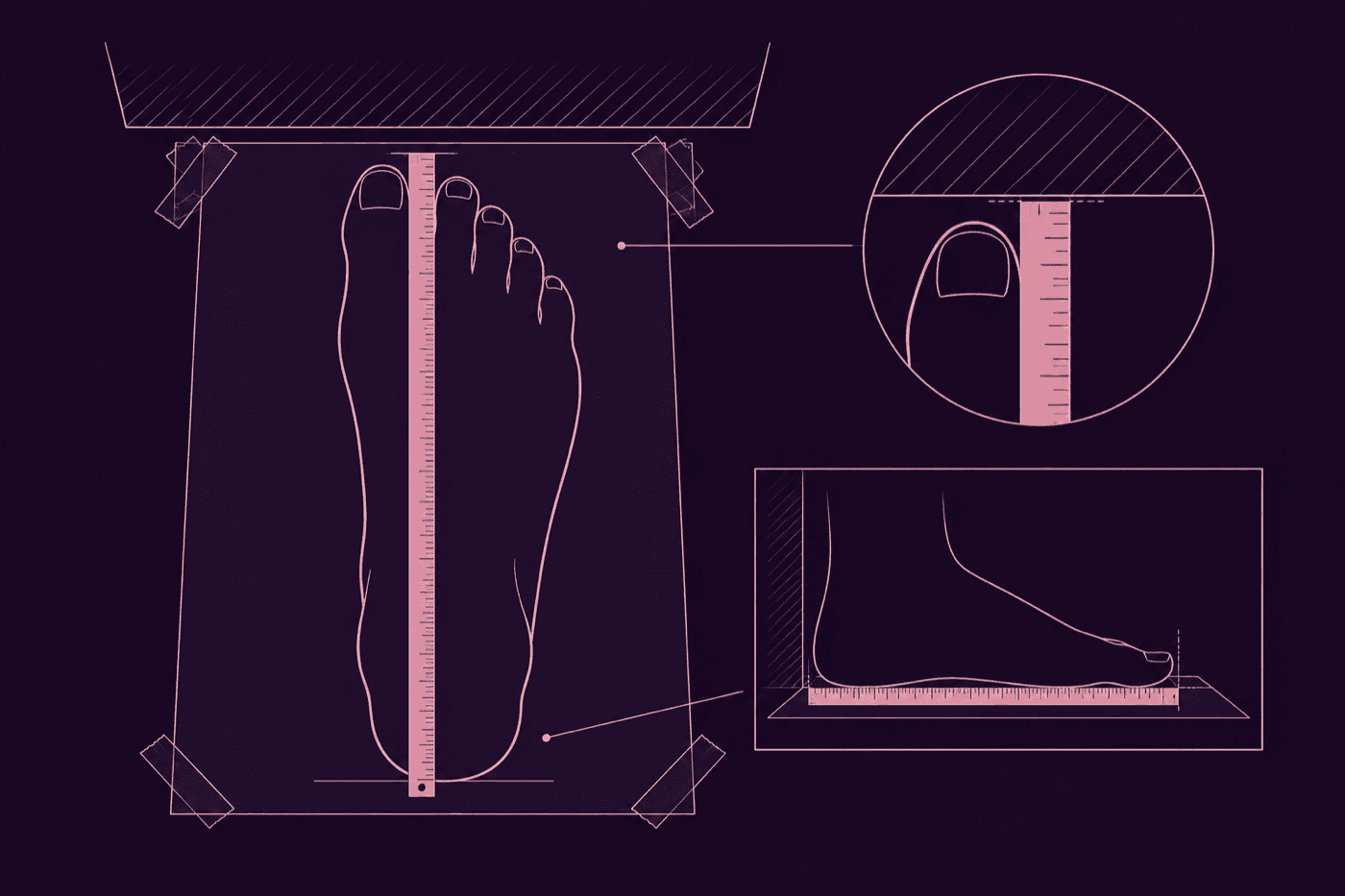
Four steps, about two minutes
- 01
Stand on paper against a wall
Heel touching the skirting board, weight on the foot. Sitting down changes the length by a few millimetres, which is enough to matter here.
- 02
Mark the longest toe
It is not always the big toe. Hold the pencil upright rather than angled, and mark the paper at the very tip.
- 03
Measure in millimetres
From the wall to the mark. Do both feet — most people have one longer than the other — and use the larger number.
- 04
Read the number off the chart
Every product page carries the same chart. The millimetre figure is the one that decides, not the size on the shoes you own.
Measure your foot length in millimetres and go by that number, not by the size you usually wear.
EU size against foot length
This chart covers the full range we cut. Individual shoes list only the sizes they are made in.
| EU size | Foot length |
|---|---|
| 28 | 180 mm |
| 29 | 187 mm |
| 30 | 193 mm |
| 31 | 200 mm |
| 32 | 207 mm |
| 33 | 213 mm |
| 34 | 220 mm |
| 35 | 227 mm |
| 36 | 233 mm |
| 37 | 240 mm |
| 38 | 247 mm |
| 39 | 253 mm |
| 40 | 260 mm |
| 41 | 267 mm |
| 42 | 273 mm |
| 43 | 280 mm |
| 44 | 287 mm |
The rest of the fit questions
What does wide fit actually mean here?
A number, not a marketing word. Our standard last measures 91–96 mm across the ball of the foot at EU 38, depending on the line. A wide fit is cut at 101–104 mm at the same length — roughly 8 mm broader.
Because the extra room is in the width and not the length, most people take a wide fit in their measured size rather than sizing down.
We make 5 wide-fit shoes across the ballet, jazz, latin, contemporary and practice lines.
Why are dance shoes taken smaller?
A dance shoe that has room to move inside it is doing less of its job. The foot slides, the shoe folds in the wrong place, and the sole is no longer where you put your weight. So the convention is a close fit, which for many people works out at half a size to a size down from their street shoes.
That is a convention about how the shoe is meant to sit. It is not a measurement, and it goes wrong often enough that we would rather you measured.
Do I need to sew anything?
On 7 of our shoes, yes. Canvas and leather ballet slippers ship without elastics or ribbons attached, because where they sit depends on the shape of your foot and the way you use it. Attaching them at the factory would mean guessing.
The elastic and ribbon kit covers two pairs and comes with a stitching diagram. Shoes with elastics or ribbons already sewn on count as altered and cannot be returned, so do the fitting first and the sewing afterwards.
Can I try them on and send them back?
Indoors, on a clean surface, yes — that is exactly what the 14-day withdrawal period is for. On a studio floor, no. A suede sole picks up its first wear on the first turn, and once it has, it is not a shoe we can sell to anyone else.
The withdrawal page sets out the conditions and carries the standard form.